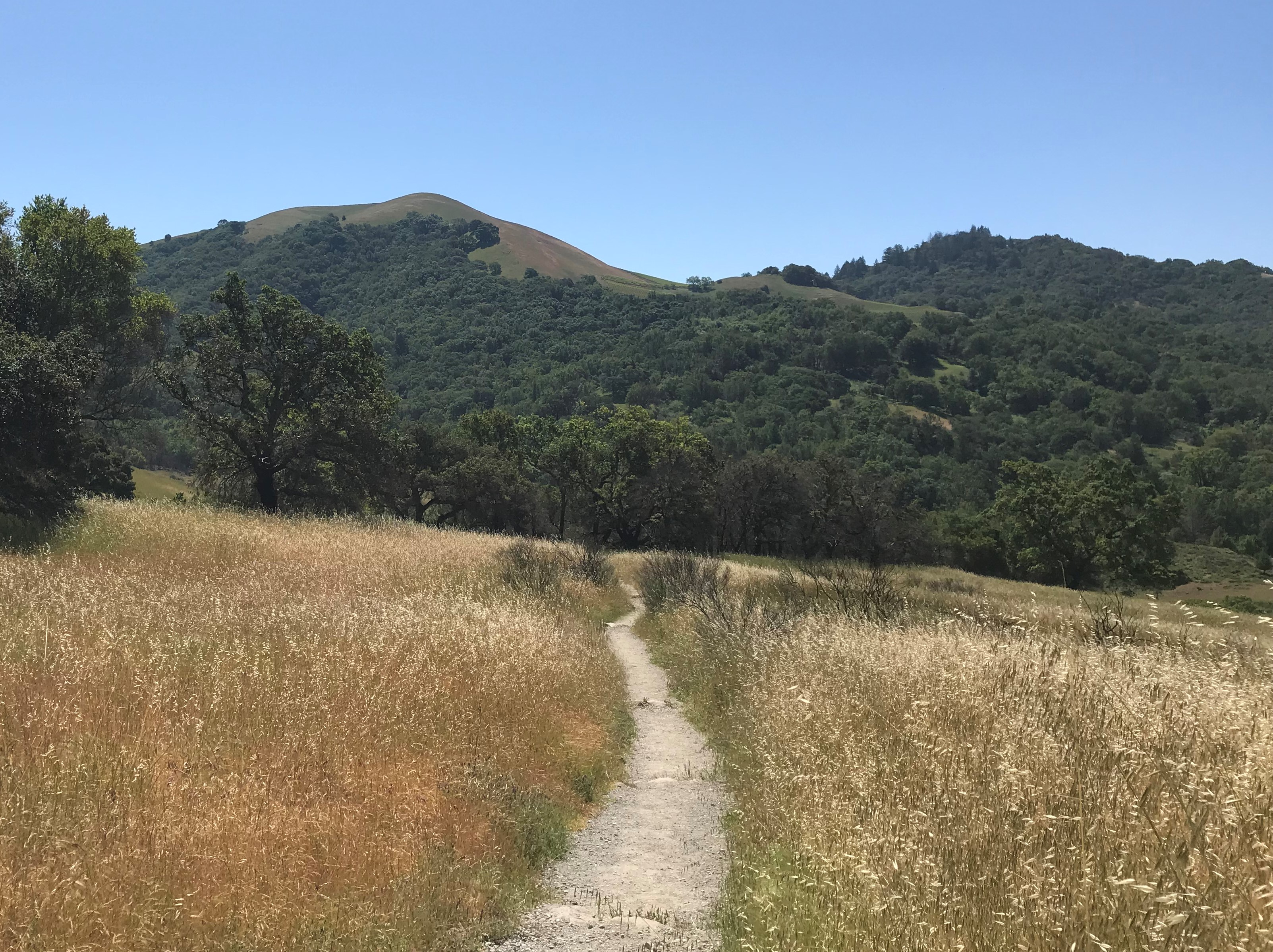
Here’s something that will completely change how you see a bird of prey.
Watching numerous birds catch a thermal updraft and ride the air current is truly mesmorizing.
So you’ve already figured out, this is a place to watch birds. People go there and sit on the rock outcroppings for hours, just to watch birds.
But it has trails too? We know, the title may have given that away. While having easier trails to reach the summit, the Hawk Mountain Sanctuary also has trails that can offer significant challenge.
And once you get to the lookout, the views…can match almost any other along the Appalachian Trail, like Appalachian Trail – Snickers Gap for instance.
Birds. Trails. Views.
Where You Are
Hawk Mountain Sanctuary sits along the Kittatinny Ridge in Berks County, Pennsylvania, about 25 miles from Reading and 30 miles west of Allentown. The ridge is part of the great Appalachian chain, and its geography is the whole reason this place exists — the mountains run north-south in this section, crosswinds hit the ridge and create updrafts, and migrating raptors funnel through in extraordinary concentrations. The Appalachian Flyway passes directly overhead.
The sanctuary covers 2,600 acres and operates as a working conservation and research organization. The annual raptor counts compiled here add to the longest continuous record of raptor populations kept anywhere in the world. Rachel Carson used Hawk Mountain data as part of the evidence that helped ban DDT in the 1970s. The birds that cross this ridge have been saving themselves, and being saved, for nearly a century.
The Trails
There are nine trails inside the Hawk Mountain Sanctuary, and let’s address something right away: Hikers have a nickname for the state, the Boot Bustin’ State. Every trail at Hawk Mountain earns that name. The terrain is rocky and ungraded throughout — with the single exception of the groomed path to the South Lookout, which is wheelchair accessible and genuinely lovely. Everything else requires proper boots, good footing, and a healthy respect for the terrain.
The Lookout Trail is where most people start. It runs one mile from the Visitor Center to the lookouts along the ridge, with South Lookout at 1,300 feet elevation and North Lookout at 1,521 feet. The North Lookout is the destination — a jumble of massive boulders with a 200-degree panoramic view that stretches up to 70 miles on a clear day. Getting there requires scrambling over and between boulders, including a 30-foot vertical section that more than one visitor has looked at with wide eyes and reconsidered their morning. It is absolutely worth it.
Below the South Lookout, visible from the ridge, is the River of Rocks — an Ice Age boulder field that looks from above like a grey river frozen in the middle of the valley. The River of Rocks Trail descends into it at 4.5 miles round trip and is rated difficult for good reason: steep grades, rough terrain, and some sections that require your hands as well as your feet. First-time visitors should know this trail takes a solid 3-4 hours and demands more energy than it looks like from above.
When we at JMO traversed the River of Rocks trail, we entered the “river” from the woods, followed the markings on the rocks and on the other end we climbed to the top on a trail reminiscent of the Kuli’ou’ou Ridge Trail in the mountains on Homolulu Island.
The Golden Eagle Trail connects the Skyline Trail to the River of Rocks, and the Skyline Trail runs the ridgetop between the Lookout Trail and the Appalachian Trail junction — adding distance and options for those who want to keep going east. Loop combinations between these trails give you anywhere from 3 to 5.5 miles depending on how ambitious you’re feeling at the trailhead.
The Appalachian Trail Connection
The AT runs right through this landscape, and the trails at Hawk Mountain connect to it with deliberate intent. It’s hard to believe that this is the same trail as we found miles away at Appalachian Trail – Snicker’s Gap Trail, that also runs through Appalachian Trail – Harper’s Ferry.
But in spectacular fashion, this trail is home to a bird population of over a hundred birds, in addition to the hawk species that next here. We’ve seen the majestic eagle.
From the Skyline Trail, you hit the Appalachian Trail in about 2.5 miles from the North Lookout heading east. Once on the AT, the options expand considerably. Just a few miles northeast along the ridge sits the Pulpit Rock and Pinnacle Loop — a 9-mile circuit along the AT that is one of the most popular hikes in eastern Pennsylvania. Pulpit Rock is a dramatic outcropping with sweeping valley views. The Pinnacle, at 1,634 feet, is the highest point on Blue Mountain along the entire Pennsylvania section of the AT, and the views from the top in every direction are the kind that make people sit down and not move for a while.
The AT in Pennsylvania has its own particular personality. It is rocky, relentless, and beautiful in a way that rewards patience. Thru-hikers passing through during fall migration season — heading north toward Springer Mountain or south toward Katahdin — often stop at Hawk Mountain specifically. You’ll meet people at the lookouts who started in Georgia, or Maine, and walked here. That puts a day hike into a certain perspective.
For those who want to explore more of the AT’s ridge-walking character in a different location, the Snicker’s Gap Trail — featured elsewhere on the JourneyMooreOften blog — offers that same satisfying combination of ridgeline views and Appalachian terrain that makes this part of the eastern seaboard so endlessly hikeable.
When to Go
Fall is the main event and there’s no argument about it. Migration kicks off in mid-August with the first bald eagles, followed by ospreys and American kestrels through September. Mid-September brings the broad-winged hawk flights — sometimes thousands in a single afternoon, kettling and streaming over the ridge in waves that draw crowds to the boulders. October adds up to 16 species of raptors. November brings golden eagles. The season runs through mid-December, and the counts are maintained every single day.
But Hawk Mountain is genuinely worth visiting any time of year. The trails are beautiful in every season — the boulder fields in snow are extraordinary, the spring wildflowers are remarkable, and summer mornings on the North Lookout, with the ridge mist burning off and the valley spread out below, are worth getting up early for.
235 bird species have been recorded at or near the sanctuary. The raptors bring most of the crowds, but the birding here is exceptional across the calendar.
Before You Go
There is an entrance fee — modest, and completely worth it. The Visitor Center has a bookstore, the Wings of Wonder gallery, and trail maps. Pick up the map. The trail junctions are well-marked but the terrain is complex enough that knowing where you are before you start saves time and confusion at the boulder fields.
Wear real shoes. Bring water. Budget more time than the mileage suggests. And if Gary makes it to the North Lookout scramble without commentary about the rocks, that will be a first.
Journey Moore Often — because some ridges were worth fighting for long before anyone thought to hike them.